History · Education
Schools and Education in Colonial Belitung
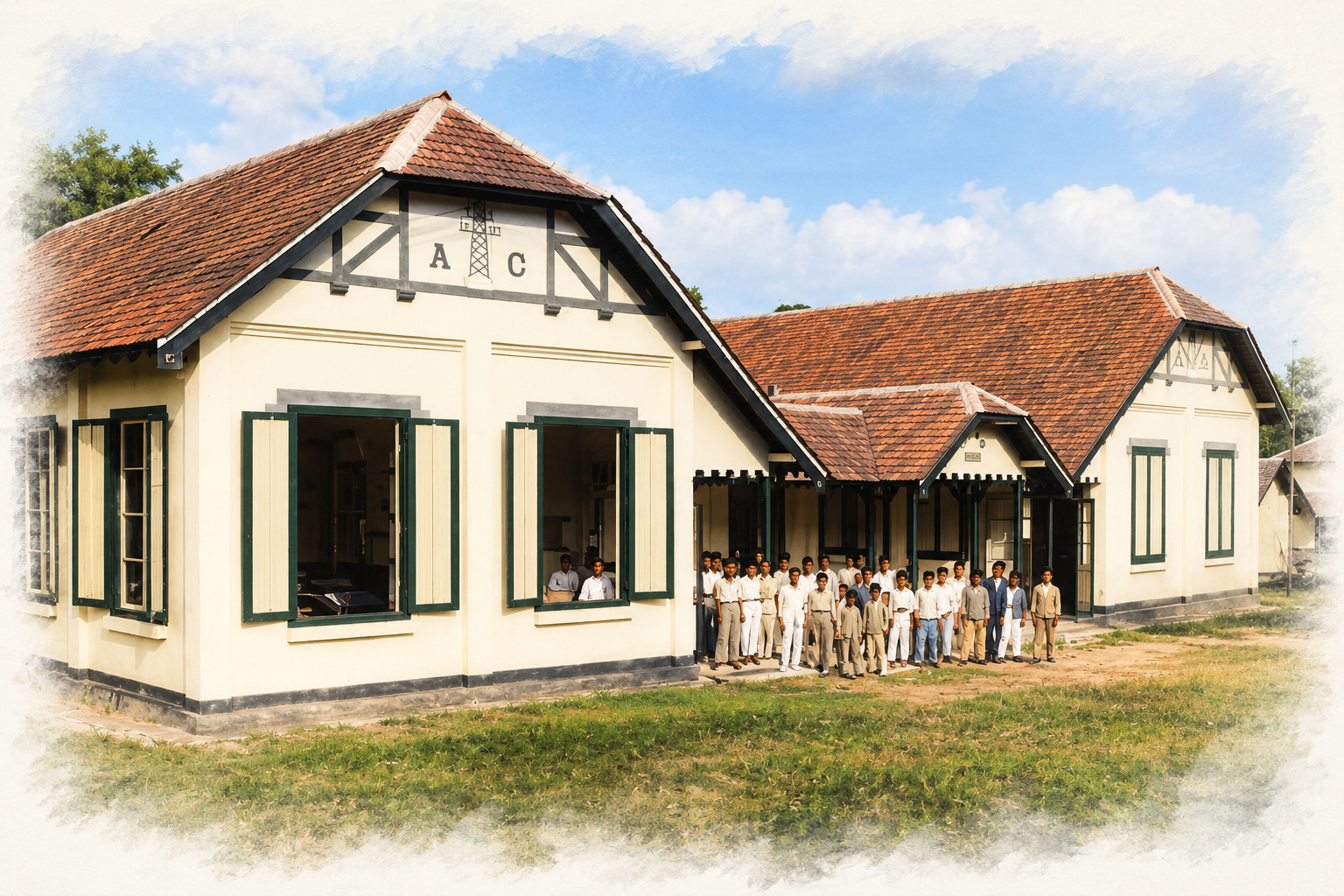
The history of schooling in Belitung is closely connected with colonial administration, tin mining, community organisations and changing access to education.
Timeline of schools
| Year | School or development | Location |
|---|---|---|
| 1874 | Government second-class indigenous school | Tanjungpandan |
| 1879 | Government second-class indigenous school | Manggar |
| 1914 | Additional indigenous schools | Manggar, Buding, Sijuk and Dendang |
| 1916 | Dutch-language school, identified as HIS in the journal | Tanjungpandan |
| 1926 | Six private Chinese schools reported | Tanjungpandan, Manggar, Lenggang and Klapa Kampit among the named locations |
| 1928 | Ambacht Cursus technical school established | Manggar |
| 1943 | Schools reopened under Japanese administration | Belitung |
Different communities and educational opportunities
Education included indigenous government schools, Dutch-language schooling, Chinese community schools and institutions associated with religious organisations. Colonial rules and social distinctions shaped who could attend different kinds of schools.
Chinese schools in Belitung
The article records six private Chinese schools in 1926, of which four received government support and two received support from the tin company. It lists one in Tanjungpandan, one in Manggar, two in Lenggang and one in Klapa Kampit.
The listed locations account for five of the six reported schools. The location of the sixth should be checked against additional records.
From classrooms to workshops
Technical training grew alongside the tin industry. Ambacht Cursus, founded in Manggar in 1928, prepared young people for mechanical and electrical work in the mining economy.
Source: Sasangka Adi Nugraha, “Ambacht Cursus 1901–1953,” Renjis, Vol. 5, No. 2 (December 2019), pp. 16–28. Information not established in this article is marked for further verification.