Orang Darat & Orang Sekah
Population, livelihoods, leaders, and customary practices recorded by John F. Loudon in his account of nineteenth-century Belitung.
Read the history →Living traditions, island communities, and the maritime heritage of old Billiton.
Belitung's cultural history has been shaped by its villages, forests, coastal waters, and encounters among Malay, Chinese, and other communities. The articles below explore both living heritage and historical descriptions preserved in nineteenth- and twentieth-century sources.
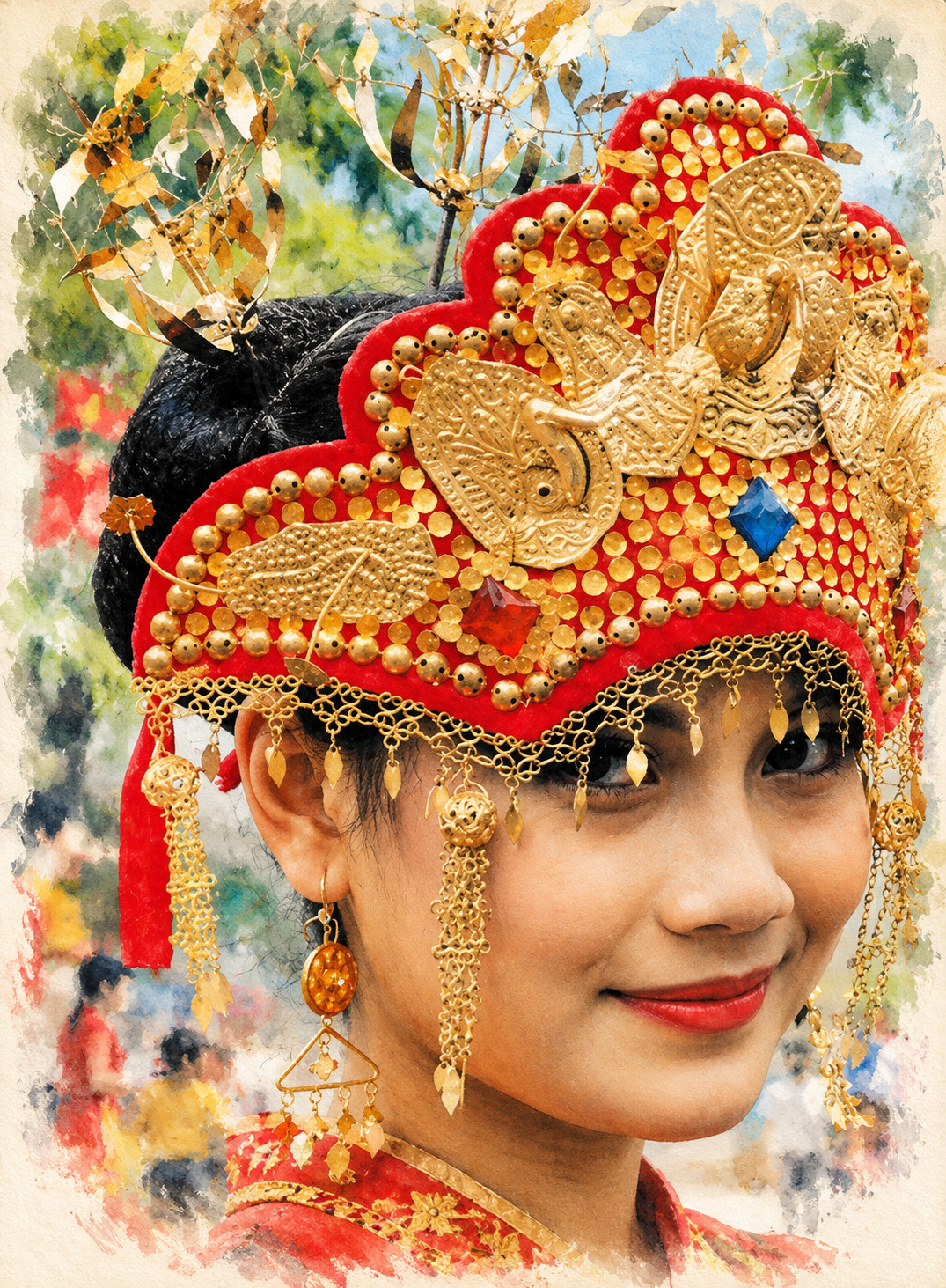
Traditional clothing, decorative ornaments, music, ceremonies, and handicrafts remain part of Belitung's cultural identity. This image also appears on the Simpur Talang homepage.
Explore the research articles below for a closer look at historical communities and customs.
Population, livelihoods, leaders, and customary practices recorded by John F. Loudon in his account of nineteenth-century Belitung.
Read the history →Seafaring communities, boat-based livelihoods, links between Bangka and Belitung, and the need to distinguish maritime life from historical accusations of piracy.
Explore maritime history →Mining taboos, ritual specialists, and special vocabulary described in a 1955 Erts article. Its examples from Malaya are presented as regional comparisons, not automatically as Belitung customs.
Discover the Pawang →Explore ceramic objects and their place in the wider history of Belitung and regional exchange.
Explore ceramics →Colonial-era records provide valuable names, descriptions, and dates, but they also reflect the viewpoints of their authors. The labels “Orang Darat” and “Orang Sekah” are used here in their historical context. Not all Orang Laut were pirates, and regional customs should not be presented as uniquely Belitung traditions without direct evidence.
Principal references for linked research: John F. Loudon, De eerste jaren der Billiton-Onderneming (1883), pp. 16–23; J. H. Koster, “De Pawang,” Erts (January 1955), pp. 219–221; and the historical maritime study supplied to Simpur Talang.