Extreme energy
A major impact struck Southeast Asia roughly 788,000 years ago, releasing immense heat and pressure into surface rocks and sediments.
Geological Heritage · Belitung Island
Known locally as Batu Satam, Billitonite is a natural black glass that carries the memory of an extraordinary impact event from deep in the Pleistocene.
Discover its story ↓A Stone with a Cosmic Story
Billitonite is a variety of tektite: natural glass created when a very large extraterrestrial impact generated enough heat and pressure to melt terrestrial surface material. Molten material was thrown through the atmosphere, cooled rapidly, and returned to Earth as glassy objects.
The tektites found on Belitung belong to the enormous Australasian tektite strewn field. Modern dating places this event at approximately 788,000 years ago. The exact source crater remains a subject of scientific research.
Formation
A major impact struck Southeast Asia roughly 788,000 years ago, releasing immense heat and pressure into surface rocks and sediments.
Terrestrial material melted and was ejected at high speed. While travelling through the atmosphere, droplets and masses of melt acquired their characteristic forms.
Rapid cooling produced the dense natural glass we call tektite. Pieces scattered over a vast part of Australasia, including Belitung.
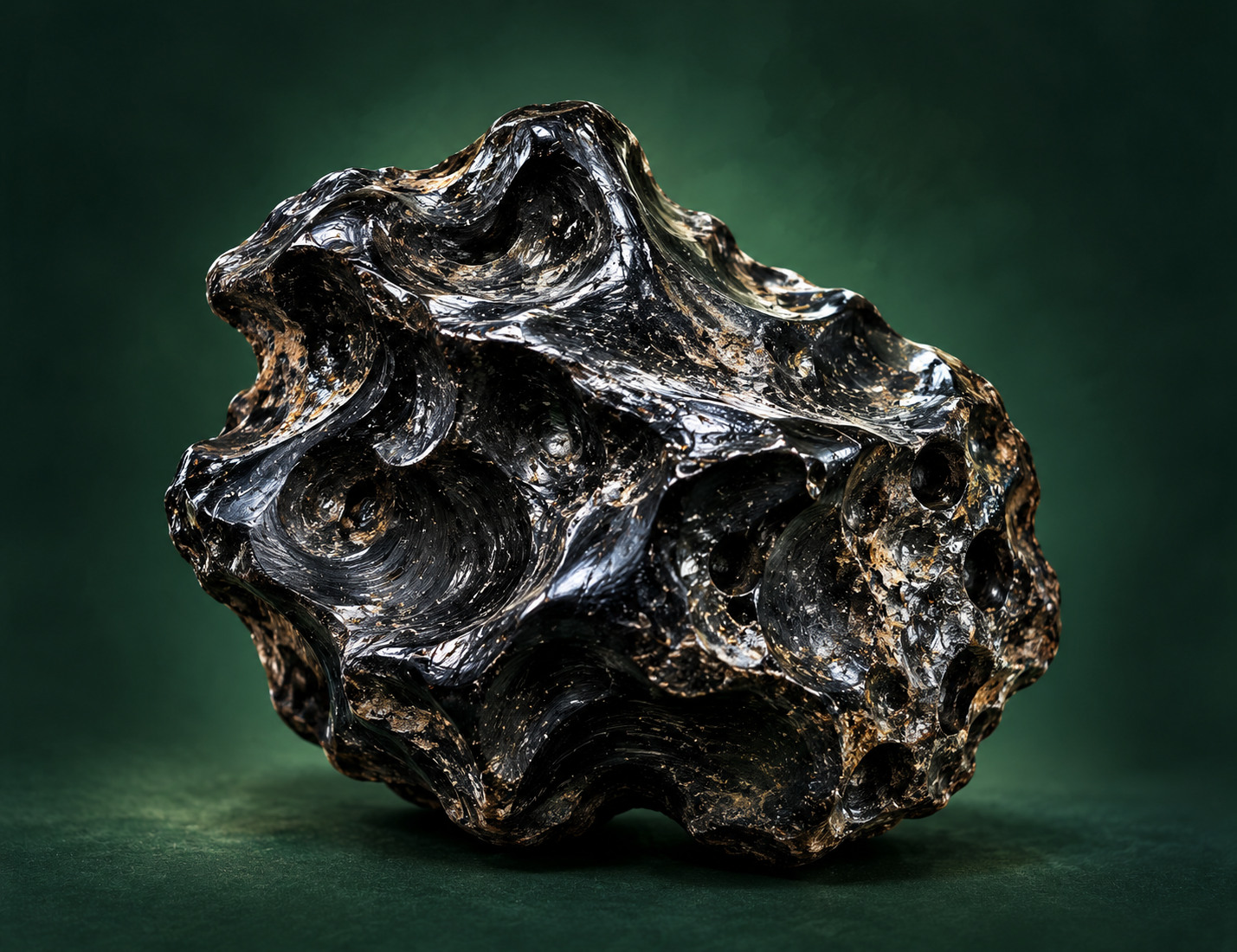
Batu Satam
On Belitung, Billitonite is widely known as Batu Satam. Its deep black colour, irregular sculpted surface, pits and grooves give every specimen an individual appearance.
Billitonite is closely associated with the island's mineral landscape. Specimens have long been encountered in ground disturbed during mining and earthworks, linking this ancient impact glass with the much more recent history of tin on Belitung.
Today Satam is more than a geological curiosity. Its distinctive form appears in jewellery, souvenirs and public imagery, making it one of the recognisable natural symbols of the island.
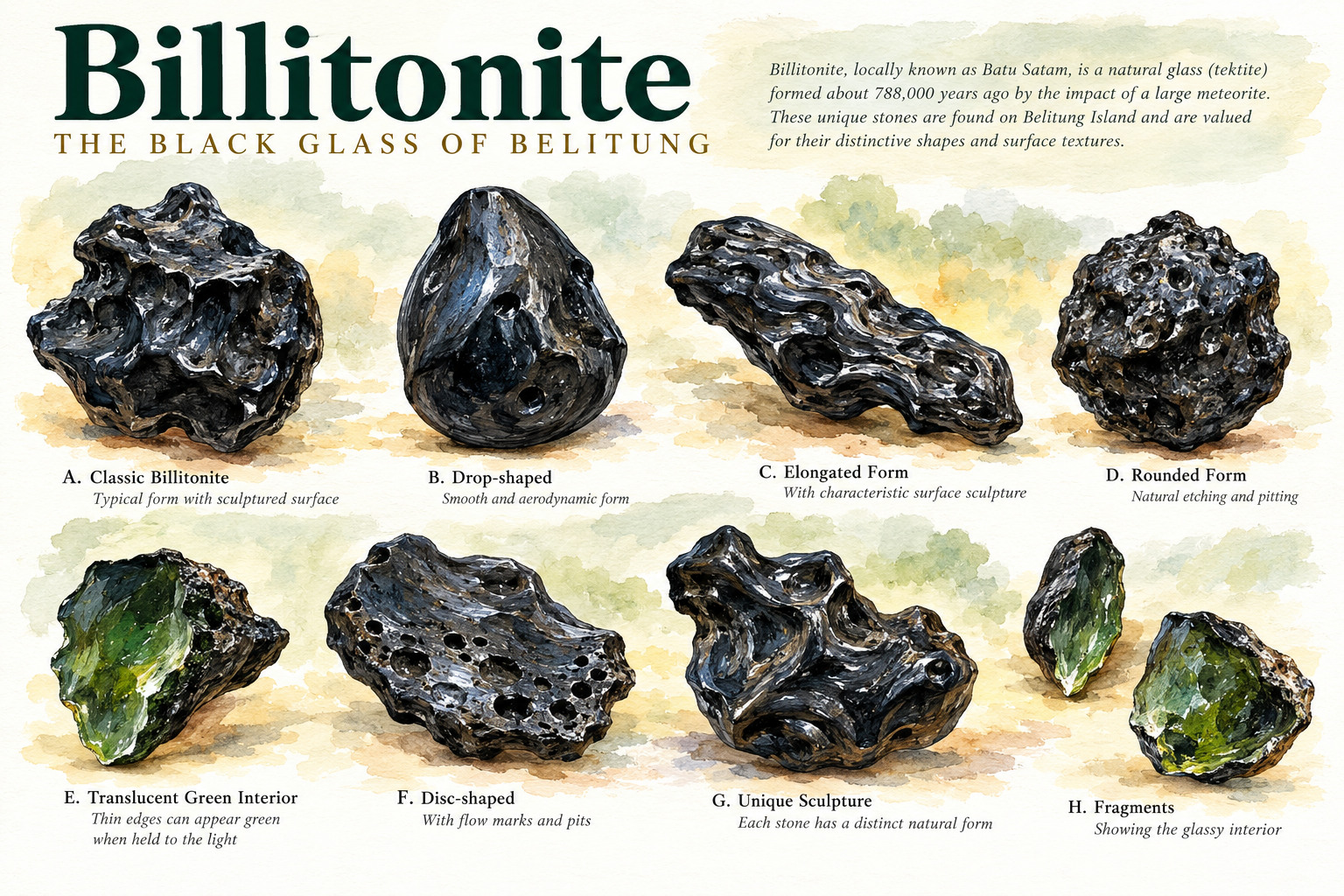
A small black stone, carrying a story that began hundreds of thousands of years before Belitung had a name.
The Name Billitonite
Tektites are often named after the regions in which they occur: australites in Australia, javanites in Java, philippinites in the Philippines — and billitonites on Billiton, the historic Dutch spelling of Belitung.
Scientific literature records tektites from Billiton in the nineteenth century. A significant description was reported by Van Dijk in 1879, helping establish Billiton as one of the classic localities in the history of tektite research.
Belitung Heritage
Granite shores, tin-bearing ground and Billitonite all belong to Belitung's remarkable geological identity. Batu Satam adds another dimension: evidence of a violent event far beyond the scale of the island itself, preserved as natural glass beneath its soil.
← Return to Simpur Talang