Nature as described in 1951
Belitung’s Flora and Fauna in a Historical Account
H. Cardinaal describes a varied landscape of sandy uplands, wooded hills, mangroves, sago palms, coastal swamps and inland wetlands. His account distinguishes primary forest from secondary growth and mentions coconut and rubber cultivation.
Plants and flowers
Among the trees, fruits and flowers named are bungur (Lagerstroemia), flamboyant (Delonix regia), orchids including Grammatophyllum, mangosteen, rambutan, mango, pineapple, papaya, bougainvillea and hibiscus.
Wildlife, birds and the sea
The account mentions lutungs, macaques, a small nocturnal primate called pelilian, deer, mouse-deer (pelandoek), wild pigs, pangolins, flying squirrels and crocodiles. Coastal seagrass beds were described as feeding places for dugongs. Birds included doves, mynas, egrets, woodpeckers, raptors and hornbills. Butterflies, beetles and other insects were also noted.
Some vernacular and zoological names in the 1951 article are imprecise by modern standards. The observations should not be read as proof that every species still occurs on Belitung today. The botanical plates in the original article were credited to B. Hoola van Nooten (1866), not to field photography on Belitung.
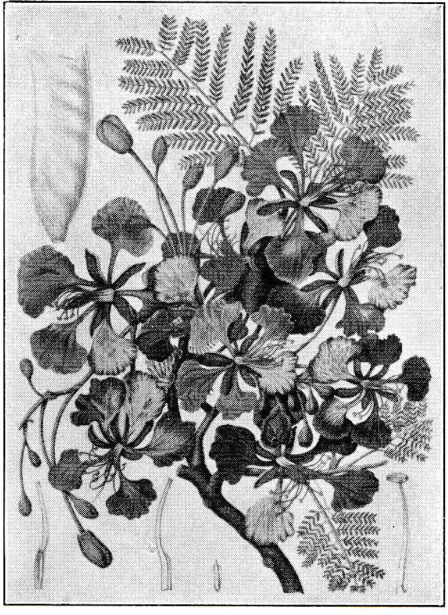
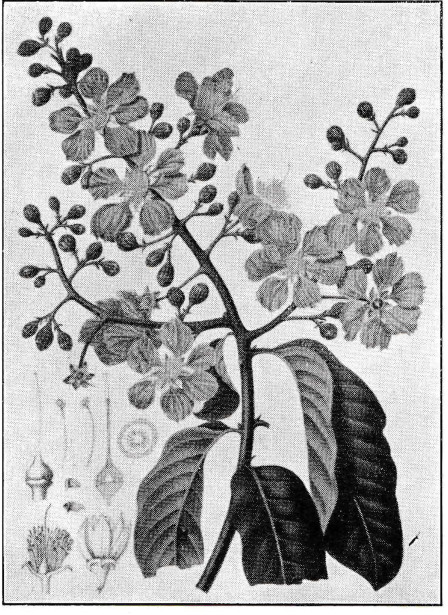
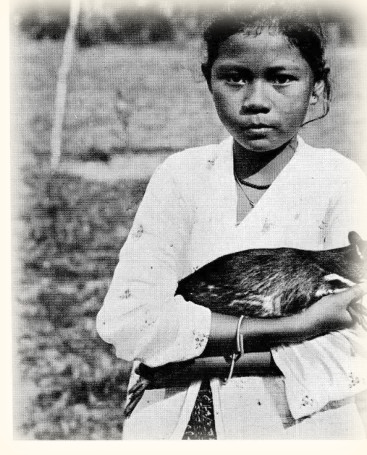
Historical source: H. Cardinaal, “Iets over de flora en fauna van Billiton”, Erts — Maandblad der Billiton Bedrijven, 1951, pp. 157–160. These are period descriptions, not a current scientific inventory. Illustrations reproduced from the supplied historical scans; check rights before public publication.